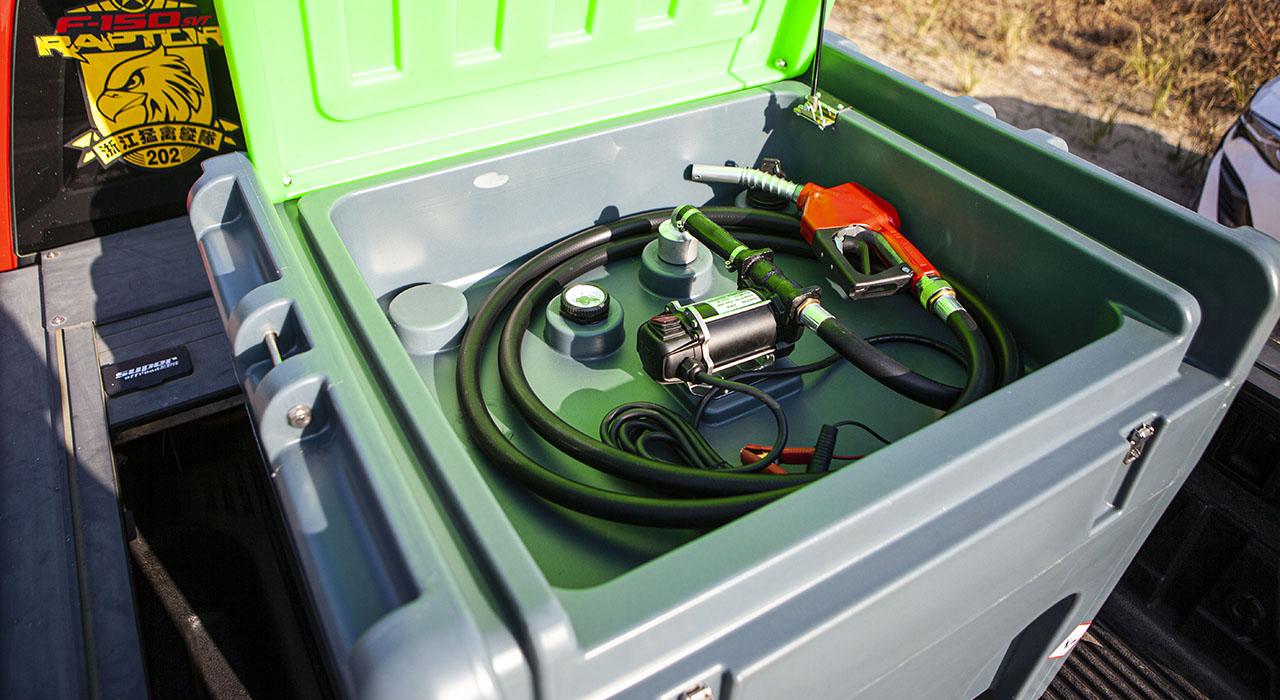
What is electric fuel pump and working principle?
An electric fuel pump is a fuel transfer device driven by an electric motor. Widely used in automotive fuel systems, gas stations, and industrial sectors, it efficiently transfers fuels such as gasoline and diesel using electrical power.
Working Principle and Core Structure
The core of an electric fuel pump consists of a pump body, a DC motor, and a housing. When energized, the DC motor drives the rotor to spin at high speed, causing the impeller to rotate synchronously; this creates a vacuum/low-pressure zone at the inlet to draw in fuel, which is then pressurized by the impeller and discharged through the outlet, providing stable pressure to the fuel system (typically up to 400 kPa). They are categorized into two types based on their working principles:
Positive displacement pumps: (e.g., roller pumps, gear pumps): These draw in and discharge fuel by varying the volume of the pump chamber; they offer high operating pressure but exhibit significant flow fluctuations.
Hydrodynamic pumps: (e.g., centrifugal pumps, turbine pumps): These generate fuel pressure through changes in impeller momentum; they provide stable pressure but have lower output pressure.
Main Types and Application Scenarios
By installation method:
In-tank (Internal): Submerged within the fuel tank; offers good heat dissipation and low noise levels; suitable for automotive fuel systems (e.g., electronic fuel injection engines).
External (Inline): Installed in series within the fuel line; easy to maintain; commonly used for industrial fuel transfer (e.g., in factories or marine vessels).